Quick Summary
Summarize this article instantly with your preferred AI model.
How to Use Thought Leadership in Your LinkedIn Ads
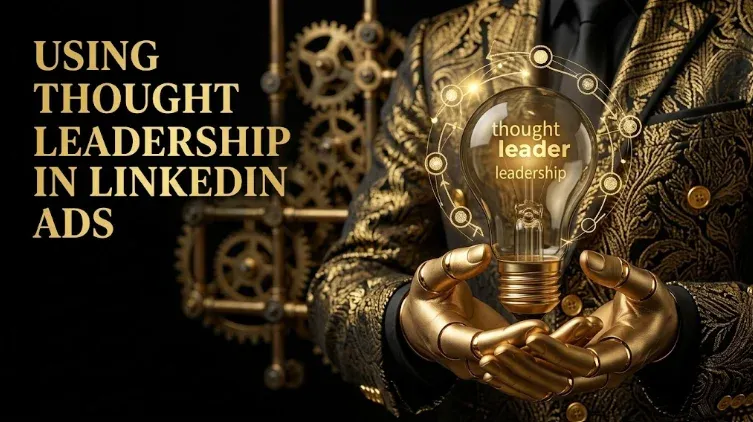
How to Use Thought Leadership in Your LinkedIn Ads
Using thought leadership in your LinkedIn Ads means promoting genuinely valuable, credible expert content — insights from founders, experts, or your company that demonstrate real expertise — rather than direct sales pitches, to build trust and preference with skeptical B2B buyers over time. It works because B2B buyers trust expertise and credibility more than sales messaging, so thought leadership that provides genuine insight builds authority and trust in a way a pitch can’t. LinkedIn even supports promoting individuals’ posts as ads. But the essential caveat is that it only works if the content is genuinely valuable and insightful — thin content dressed as thought leadership fails. This guide covers how to use thought leadership in your LinkedIn Ads.
Key takeaways
- Thought leadership means promoting genuinely valuable, credible expert content, not direct pitches.
- It works because B2B buyers trust expertise and credibility more than sales messaging.
- It builds trust, authority, and preference over time — a longer-term, brand-building play.
- LinkedIn supports promoting individuals’ posts as ads (thought leader ads).
- It only works if the content is genuinely valuable — thin content dressed as thought leadership fails.
What is thought leadership in advertising?
Promoting credible, valuable expert content that demonstrates expertise, rather than pitching. Thought leadership content is insight, perspective, and expertise — from your founders, experts, or company — that provides genuine value to the reader and demonstrates that you know your domain. Using it in advertising means promoting this content, rather than running direct sales pitches, so that your advertising builds credibility and trust by showcasing expertise instead of asking for a sale. LinkedIn supports this directly with formats that let you promote posts from individuals (thought leader ads), so a founder’s or expert’s insightful post can be promoted as an ad.
This differs fundamentally from pitch-based advertising:
| Sales pitch | Thought leadership | |
|---|---|---|
| Content | Promotes your product | Provides genuine insight |
| Goal | Immediate response | Trust and authority over time |
| Tone | Selling | Sharing expertise |
| Effect | Can feel salesy | Builds credibility |
So thought leadership advertising uses valuable expert content to build credibility and trust, rather than sales messaging to drive immediate response. It’s a different mode — sharing expertise rather than selling — which resonates with B2B buyers differently than a pitch. Understanding thought leadership as promoting genuine expertise, not pitching, is the basis for using it well.
Why does thought leadership work for B2B?
Because B2B buyers trust expertise and credibility more than sales messaging, so demonstrating expertise builds trust a pitch can’t. B2B buyers are skeptical of sales messaging — they’ve seen countless pitches and discount self-promotion — but they value genuine expertise and insight, because it’s useful to them and signals that a vendor knows their domain. So thought leadership that provides real value and demonstrates expertise builds credibility and trust with these buyers, positioning you as a knowledgeable authority rather than just another vendor pitching, which resonates where a pitch is discounted.
This trust-building happens over time and is a form of brand-building. Thought leadership doesn’t typically drive immediate response the way a direct pitch aims to; instead, it builds authority, trust, and preference gradually, as buyers encounter your valuable expertise and come to see you as credible and knowledgeable. So it’s a longer-term play that pays off downstream — building the credibility and preference that make buyers more receptive to you when they’re ready to buy. This connects to brand-building’s role: thought leadership is a way of building brand through demonstrated expertise, creating trust and authority over time rather than driving immediate conversion. So it works for B2B by meeting buyers’ trust in expertise, building credibility that a skeptical B2B audience grants to genuine insight but withholds from pitches.
How do you use thought leadership well?
By promoting genuinely valuable, credible content, since thin content fails. The essential requirement is that the content is actually valuable and insightful — real expertise, genuine perspective, useful insight — because thought leadership only builds credibility if it demonstrates genuine expertise. Thin content dressed up as thought leadership — shallow takes, thinly-veiled pitches, generic content — fails, because it doesn’t provide the value or demonstrate the expertise that builds trust, and a discerning B2B audience sees through it. So using thought leadership well starts with having genuinely valuable content worth promoting.
Beyond genuine value, using thought leadership well means promoting credible content, often from credible individuals (founders, experts) whose expertise lends authority, and treating it as a trust-and-authority-building effort rather than expecting immediate response. Promote the content to build credibility and preference over time, understanding that its value is the trust and authority it builds, not an immediate conversion. So the keys are: genuine, valuable content; credibility (real expertise, credible sources); and the right expectation (building trust over time, a brand-building play). Used this way, thought leadership builds the credibility that resonates with B2B buyers; used with thin content or the wrong expectation, it fails.
The thought-leadership framework
Use thought leadership in your ads deliberately:
- Promote genuine expertise — valuable, insightful content, not pitches dressed as thought leadership.
- Ensure it’s genuinely valuable — thin content fails, since a discerning B2B audience sees through it.
- Use credible sources — content from founders and experts whose expertise lends authority.
- Build trust over time — treat it as authority- and trust-building, not immediate response.
- Understand it’s brand-building — its value is the credibility and preference it builds downstream.
Why must thought leadership content be genuinely valuable?
Because its power comes from demonstrating real expertise, which thin content doesn’t do, so genuine value is essential. Thought leadership builds credibility and trust by providing genuine insight that shows you know your domain — that’s the entire mechanism, so if the content isn’t genuinely valuable and insightful, it doesn’t build the credibility, because there’s no real expertise being demonstrated. Thin content — shallow, generic, or a pitch masquerading as insight — fails on two counts: it doesn’t provide the value that makes buyers appreciate it, and it doesn’t demonstrate the expertise that builds authority, so it doesn’t achieve what thought leadership is supposed to. Worse, a discerning B2B audience — the very audience thought leadership targets, who value genuine expertise — sees through thin content, so promoting it can undermine credibility rather than build it. This is why genuine value is non-negotiable for thought leadership: the approach depends entirely on the content actually being valuable and insightful, so there’s no shortcut of dressing thin content as thought leadership. This connects to the broader theme that B2B buyers respond to genuine substance over hype: thought leadership is a substance-based approach, so it requires real substance, and attempting it without genuine value fails because the audience recognizes the difference. So using thought leadership means having and promoting genuinely valuable, credible content — real expertise worth a buyer’s attention — since that genuine value is what builds the trust and authority that make thought leadership effective. Without it, promoting content as thought leadership is hollow and can backfire with a discerning audience, which is why the quality and genuineness of the content is the foundation of using thought leadership in your advertising.
Frequently Asked Questions
Q1. How do you use thought leadership in LinkedIn Ads?
Promote genuinely valuable, credible expert content — insights from founders, experts, or your company that demonstrate real expertise — rather than direct pitches, to build trust and authority with skeptical B2B buyers over time. Ensure the content is genuinely valuable (thin content fails), use credible sources, and treat it as a trust-building, brand-building play rather than expecting immediate response. LinkedIn supports promoting individuals’ posts as ads.
Q2. What is thought leadership in advertising?
Promoting credible, valuable expert content that demonstrates expertise, rather than running sales pitches. Thought leadership content provides genuine insight and perspective from your founders, experts, or company, so promoting it builds credibility and trust by showcasing expertise instead of asking for a sale. It’s a different mode from pitch-based advertising — sharing expertise rather than selling — which resonates with skeptical B2B buyers differently than a pitch.
Q3. Why does thought leadership work for B2B?
Because B2B buyers trust expertise and credibility more than sales messaging, which they discount. They value genuine insight, since it’s useful and signals a vendor knows their domain, so thought leadership that provides real value builds credibility and positions you as an authority rather than just another vendor pitching. This resonates where a pitch is discounted, building trust with a skeptical audience that values expertise.
Q4. What are LinkedIn thought leader ads?
A format that lets you promote posts from individuals as ads, so a founder’s or expert’s insightful post can be promoted. This supports thought leadership advertising directly, letting you amplify credible content from credible individuals whose expertise lends authority. It’s a way to use genuine expert content — rather than company sales messaging — in your advertising, promoting the kind of insightful individual content that builds trust with B2B buyers.
Q5. Does thought leadership drive immediate results?
Not typically — it builds trust, authority, and preference over time rather than driving immediate response like a direct pitch. Thought leadership is a longer-term, brand-building play that pays off downstream, as buyers encounter your valuable expertise and come to see you as credible, making them more receptive when ready to buy. So its value is the credibility and preference it builds gradually, not immediate conversion.
Q6. Why must thought leadership content be genuinely valuable?
Because its power comes from demonstrating real expertise, which thin content doesn’t do. Thought leadership builds credibility by providing genuine insight that shows you know your domain — so if the content isn’t valuable and insightful, it doesn’t build credibility. Thin content fails to provide value or demonstrate expertise, and a discerning B2B audience sees through it, potentially undermining credibility. Genuine value is essential and non-negotiable.
Q7. Is thought leadership a form of brand-building?
Yes — it builds trust, authority, and preference over time through demonstrated expertise, which is brand-building. Rather than driving immediate conversion, it creates credibility and preference gradually, making buyers more receptive to you when they’re ready. So thought leadership is a way of building brand through genuine expertise, with its value being the downstream trust and preference it builds, aligning with brand-building’s longer-term, compounding payoff.
Q8. What happens if you promote thin thought leadership content?
It fails and can backfire — thin content dressed as thought leadership doesn’t provide value or demonstrate expertise, so it doesn’t build the credibility thought leadership aims for, and a discerning B2B audience sees through it, potentially undermining your credibility rather than building it. Since thought leadership depends entirely on genuine value, there’s no shortcut of promoting shallow content, which the audience recognizes as hollow.
More Featured Blogs
View All Blogs
Broad vs Narrow Targeting on LinkedIn: Finding the Right Breadth



Understanding Cost Per Lead (CPL) on LinkedIn
Brand vs Direct Response Advertising: Why B2B Needs Both