Quick Summary
Summarize this article instantly with your preferred AI model.
What Is Account-Based Advertising on LinkedIn?
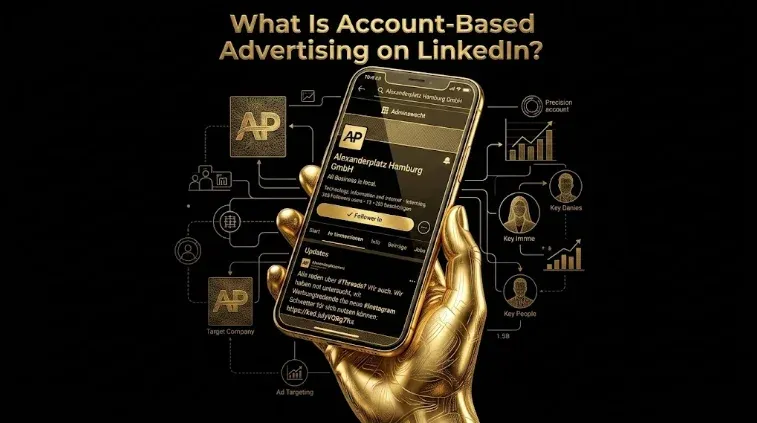
What Is Account-Based Advertising on LinkedIn?
Account-based advertising means focusing your advertising on a defined set of specific target accounts — chosen companies you want to win — rather than casting a broad net across a wide audience. Instead of reaching as many potential buyers as possible, you concentrate your spend and effort on a curated list of high-value accounts, targeting the people at those companies and coordinating with sales to pursue them. This fits high-value, considered B2B sales where a defined set of accounts is worth concentrated effort — but it depends entirely on choosing the right accounts, since concentrating spend on the wrong ones wastes it. This guide covers what account-based advertising is, how it works on LinkedIn, and when it fits.
Key takeaways
- Account-based advertising focuses spend on a defined set of target accounts, not a broad audience.
- It concentrates effort on chosen high-value companies rather than reaching as many people as possible.
- It fits high-value, considered B2B sales where specific accounts are worth concentrated effort.
- It depends on a good target account list — concentrating on the wrong accounts wastes spend.
- It works best coordinated with sales, pursuing the target accounts together.
What is account-based advertising?
Advertising focused on a defined set of specific accounts rather than a broad audience. In account-based advertising (the advertising expression of account-based marketing, or ABM), you identify a specific set of target accounts — companies you want to win — and concentrate your advertising on reaching the people at those accounts, rather than reaching a broad audience of many potential buyers. So the defining feature is focus: you’re deliberately concentrating your spend and effort on a chosen set of accounts, not spreading it across a wide audience.
This contrasts with broad, audience-based advertising:
| Broad advertising | Account-based advertising | |
|---|---|---|
| Target | A wide audience | A defined set of specific accounts |
| Approach | Reach many potential buyers | Concentrate on chosen accounts |
| Spend | Spread across the audience | Focused on target accounts |
| Best for | Broad markets, many buyers | High-value, defined accounts |
Broad advertising aims to reach as many good-fit buyers as possible across a wide audience; account-based advertising deliberately narrows to a chosen set of accounts and concentrates on them. Neither is universally better — they suit different situations — but account-based advertising is fundamentally about focus and concentration on specific accounts, which is what distinguishes it. Understanding this focused, account-centric approach is the starting point for understanding when and how to use it.
How does account-based advertising work on LinkedIn?
By defining target accounts and using company-based targeting to reach them, coordinated with sales. The mechanics involve defining your target accounts — the specific companies worth pursuing — then using LinkedIn’s company-based targeting to reach the people at those accounts, concentrating your advertising on them. LinkedIn is well-suited to this because it lets you target by company, so you can focus your ads on your defined account list, reaching the relevant roles at those specific companies.
Account-based advertising works best coordinated with sales, since ABM is typically a marketing-and-sales effort to win high-value accounts together. The advertising builds awareness and engagement at the target accounts, while sales pursues them directly, so coordinating the two — advertising warming and engaging the accounts, sales engaging personally — concentrates a combined effort on winning the chosen accounts. This is how account-based advertising operates: define the accounts, target them on LinkedIn, concentrate advertising on them, and coordinate with sales to pursue them, focusing combined resources on the specific high-value accounts you want to win.
When does account-based advertising fit?
When you have high-value, considered sales and a defined set of accounts worth concentrated effort. Account-based advertising suits situations where specific accounts are valuable enough to justify concentrating spend and effort on them — typically high-value B2B sales, like enterprise or key accounts, where winning a particular account is worth a focused, coordinated effort. When your best opportunities are a definable set of high-value accounts, concentrating on them efficiently directs your resources at the accounts that matter most, which is what ABM does well.
It fits less well when your market is broad and made up of many smaller buyers, where concentrating on a defined set of accounts would miss the volume-based opportunity of reaching many buyers. If your business is about acquiring many smaller customers rather than winning specific high-value accounts, broad advertising suits better than ABM’s concentration. So account-based advertising is a fit when you have high-value accounts worth focused pursuit, and less of a fit when your opportunity is broad and volume-based. Recognizing when your situation calls for concentrated, account-focused advertising versus broad, audience-based advertising is key to using ABM appropriately.
The account-based advertising framework
Use account-based advertising deliberately:
- Define your target accounts — the specific high-value companies worth concentrated effort.
- Target them on LinkedIn — use company-based targeting to reach the people at those accounts.
- Concentrate your spend — focus your advertising on the target accounts, not a broad audience.
- Coordinate with sales — pursue the target accounts together, advertising and sales reinforcing.
- Use it when it fits — high-value, defined accounts, rather than broad, volume-based markets.
Why does account-based advertising depend on the right accounts?
Because it concentrates spend on a defined set, so if those accounts are wrong, the concentrated spend is wasted. The whole premise of account-based advertising is focusing resources on chosen accounts — which is powerful when the accounts are the right ones (high-value, good-fit, winnable) but wasteful when they’re not, because you’re concentrating spend on companies that won’t convert or aren’t worth the effort. So the quality of your target account list determines whether account-based advertising pays off: a great list focuses your effort on accounts worth winning, while a poor list concentrates it on the wrong companies. This makes defining the right target accounts the foundation of account-based advertising, not a preliminary detail — the concentration that makes ABM powerful also makes it dependent on choosing well, since the focus amplifies both good and bad account choices. This connects to the importance of building a good target account list: because account-based advertising concentrates on a defined set, that set has to be the right accounts, chosen based on fit and value, for the concentration to pay off. So using account-based advertising well means investing in defining the right accounts, since the approach’s strength — focus — becomes a weakness if the focus is on the wrong accounts. The concentrated nature of ABM rewards good account selection and punishes poor selection, so getting the accounts right is essential to making account-based advertising effective, which is why the target account list is where account-based advertising really begins.
Frequently Asked Questions
Q1. What is account-based advertising?
Advertising focused on a defined set of specific target accounts — chosen companies you want to win — rather than a broad audience. It concentrates your spend and effort on a curated list of high-value accounts, targeting the people at those companies, instead of reaching as many potential buyers as possible. It’s the advertising expression of account-based marketing (ABM), defined by its focus on specific accounts.
Q2. How is account-based advertising different from broad advertising?
Broad advertising aims to reach as many good-fit buyers as possible across a wide audience, while account-based advertising deliberately narrows to a defined set of specific accounts and concentrates spend and effort on them. So the difference is focus: broad advertising spreads across an audience, ABM concentrates on chosen accounts. Neither is universally better — they suit different situations — but ABM is fundamentally about concentration on specific accounts.
Q3. How does account-based advertising work on LinkedIn?
Define your target accounts (the specific companies worth pursuing), then use LinkedIn’s company-based targeting to reach the people at those accounts, concentrating your advertising on them, coordinated with sales. LinkedIn suits this because it lets you target by company. The advertising builds awareness and engagement at the target accounts while sales pursues them, focusing combined effort on winning the chosen high-value accounts.
Q4. When should you use account-based advertising?
When you have high-value, considered sales and a defined set of accounts worth concentrated effort — typically enterprise or key accounts where winning a particular account justifies a focused, coordinated effort. It fits when your best opportunities are definable high-value accounts. It fits less well for broad markets of many smaller buyers, where concentrating on a defined set would miss the volume-based opportunity of reaching many buyers.
Q5. Does account-based advertising work with sales?
Yes — it works best coordinated with sales, since ABM is typically a marketing-and-sales effort to win high-value accounts together. The advertising builds awareness and engagement at the target accounts while sales pursues them directly, so coordinating the two concentrates a combined effort on winning the chosen accounts. Advertising warms and engages the accounts, sales engages personally, reinforcing each other.
Q6. Why does account-based advertising need the right accounts?
Because it concentrates spend on a defined set, so if those accounts are wrong, the concentrated spend is wasted on companies that won’t convert or aren’t worth the effort. The focus that makes ABM powerful also makes it dependent on choosing well, since it amplifies both good and bad account choices. So the quality of your target account list determines whether account-based advertising pays off, making account selection foundational.
Q7. Is account-based advertising better than broad advertising?
Neither is universally better — they suit different situations. Account-based advertising fits high-value sales with definable accounts worth concentrated effort, while broad advertising fits broad markets of many buyers where volume matters. The right choice depends on whether your opportunity is a defined set of high-value accounts (favoring ABM) or a broad audience of many buyers (favoring broad advertising), so match the approach to your situation.
Q8. What do you need for account-based advertising?
A defined target account list of the specific high-value companies worth pursuing, company-based targeting to reach them on LinkedIn, and ideally coordination with sales. The target account list is foundational, since ABM concentrates on those accounts, so they must be the right ones. With the right accounts defined, you concentrate advertising on them and coordinate with sales to focus combined effort on winning them.
More Featured Blogs
View All Blogs
LinkedIn Ads Engagement Rate: What It Is and What Is Good


LinkedIn Ads on a Small Budget: How to Make It Work