Quick Summary
Summarize this article instantly with your preferred AI model.
LinkedIn Text Ads & Spotlight Ads: The Cheap-Frequency B2B Formats
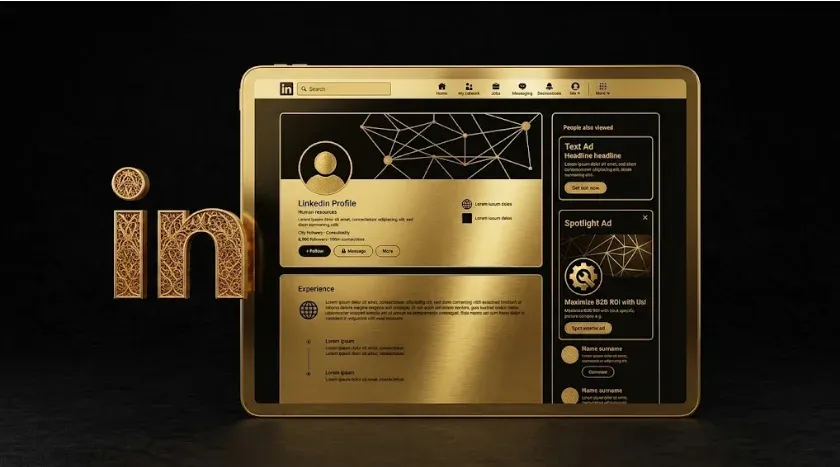
LinkedIn Text Ads & Spotlight Ads: The Cheap-Frequency B2B Formats
Text Ads and Spotlight Ads are LinkedIn’s low-cost, desktop-only sidebar formats — and they’re the most overlooked tools in B2B advertising. Neither will carry a campaign on its own, but both buy inexpensive impressions against a tightly targeted audience, which makes them excellent supporting formats for building brand familiarity across a buying committee or staying present through a long sales cycle. This guide covers what each format is, why their cheap frequency matters more than their click-through rate, where they fit alongside Sponsored Content, and the desktop-only limitation you have to plan around.
Key takeaways
- Text Ads are simple headline-plus-thumbnail units in the desktop sidebar — cheap, high-impression, low-CTR.
- Spotlight Ads are dynamic ads that personalize using the member’s own profile data, including their photo.
- Both are desktop-only, so they can’t reach the large share of LinkedIn usage that happens on mobile.
- Their value is cheap frequency, not direct response — ideal for buying-committee awareness and long-cycle presence.
- Use them as assisting formats alongside Sponsored Content, not as a primary conversion channel.
What are LinkedIn Text Ads?
Text Ads are small, simple units that appear in the right-hand sidebar and top banner of the LinkedIn desktop experience. Each is essentially a short headline, a line of description, and a small thumbnail image, sold on a CPC or CPM basis. They’re fast to produce — no design sprint, no video — and cheap to run, which is precisely the point.
The trade-off is that they’re easy to ignore. Sidebar units earn far lower click-through rates than in-feed Sponsored Content, and their creative real estate is tiny. Judged as a direct-response format, Text Ads look bad. Judged as a way to buy a lot of impressions in front of exactly the right people for very little money, they look very different.
What are Spotlight Ads?
Spotlight Ads are part of LinkedIn’s Dynamic Ads family, and their distinguishing feature is personalization: the ad pulls from the viewing member’s own profile, so it can display their photo and address them individually. That personal touch tends to lift engagement relative to a static sidebar unit, because the ad visibly acknowledges the person seeing it.
Spotlight Ads drive traffic to a destination you choose — a landing page, a demo, a product tour — with a custom CTA button. Like Text Ads, they run on desktop only. They work well for promoting a specific offer or event to a warm, precisely defined audience, where the personalization can carry weight.
Why cheap frequency matters more than CTR
Here’s the argument for both formats. In a B2B deal, most of the buying committee will never click an ad. The CFO, the security lead, and the procurement gatekeeper aren’t going to request a demo from a sidebar unit — but if they’ve seen your name a dozen times before the champion brings you into a meeting, you enter that room as a familiar company rather than an unknown vendor. That familiarity is what these formats buy, cheaply.
Because Text Ads deliver high impressions at low cost, they’re an efficient way to maintain presence across a small, high-value audience — exactly the situation where an expensive Sponsored Content campaign would burn budget fast. In a long sales cycle, staying visible for months is a real job, and it doesn’t need a premium format to do it.
Where do these formats fit in the funnel?
| Format | Placement | Best for | Primary value | Don’t expect |
|---|---|---|---|---|
| Text Ads | Desktop sidebar / banner | Committee awareness, long-cycle presence | Cheap impressions and frequency | High CTR or direct conversions |
| Spotlight Ads | Desktop sidebar | Promoting a specific offer to a warm audience | Personalized engagement | Mobile reach |
| Sponsored Content | In-feed, all devices | Primary reach, engagement, conversion | Full-funnel workhorse | Cheap frequency |
Think of Text and Spotlight Ads as assisting formats. Sponsored Content does the heavy lifting in the feed on every device; the sidebar formats add inexpensive repetition against the same audience on desktop. Running them together gives you frequency without inflating your primary campaign’s CPMs.
The supporting-format framework
Use these formats deliberately rather than as an afterthought:
- Define the audience you need to stay present with. Usually a buying committee, a target-account list, or an engaged retargeting pool.
- Run Sponsored Content as the primary campaign for reach, engagement, and conversion on all devices.
- Layer Text Ads against the same audience to accumulate cheap impressions and brand familiarity on desktop.
- Add Spotlight Ads when you have a specific offer worth personalizing to a warm audience.
- Measure them as assists, not as standalone converters.
What’s the catch with desktop-only formats?
The limitation is real: Text and Spotlight Ads don’t appear on mobile, and a large share of LinkedIn engagement happens there. That means these formats reach only a portion of your audience, and some committee members may never see them at all. Plan accordingly — never build a campaign that depends solely on a desktop format, and treat sidebar impressions as supplementary coverage rather than as your reach strategy.
How do you measure Text and Spotlight Ads?
Don’t judge them on click-through rate or cost per lead; they’ll fail that test by design. Measure them the way you’d measure any brand-frequency investment: impressions and frequency delivered against your target audience at what cost, and whether accounts exposed to them show better engagement, faster pipeline progression, or higher conversion rates in your primary campaigns. If your attribution can compare exposed and unexposed accounts, that’s the cleanest read. Cost per thousand impressions against the right audience is a more honest metric here than cost per click.
Frequently Asked Questions
Q1. What are LinkedIn Text Ads?
Text Ads are simple sidebar units on LinkedIn’s desktop experience, made up of a short headline, a line of description, and a small thumbnail, sold on a CPC or CPM basis. They’re cheap and fast to produce, deliver high impressions, and earn low click-through rates — which makes them a frequency format rather than a direct-response one.
Q2. What are LinkedIn Spotlight Ads?
Spotlight Ads are part of LinkedIn’s Dynamic Ads family and personalize using the viewing member’s own profile data, including their photo, addressing them individually. They drive traffic to a destination you choose with a custom CTA button. Like Text Ads, they run on desktop only, and work best promoting a specific offer to a warm audience.
Q3. Are LinkedIn Text Ads worth it?
Yes, as a supporting format. They won’t produce meaningful direct conversions, but they buy cheap impressions against a tightly targeted audience, which builds brand familiarity across a buying committee and maintains presence through a long sales cycle. Judge them on cost-efficient frequency against the right people, not on click-through rate.
Q4. Do Text Ads and Spotlight Ads show on mobile?
No. Both are desktop-only formats, appearing in the LinkedIn sidebar rather than the feed. Since a large share of LinkedIn engagement happens on mobile, these formats reach only part of your audience. Never build a campaign that depends solely on them — use them as supplementary coverage alongside Sponsored Content.
Q5. What is the difference between Text Ads and Sponsored Content?
Sponsored Content appears in the feed across all devices and does the primary work of reach, engagement, and conversion. Text Ads appear in the desktop sidebar, cost far less, deliver more impressions per dollar, and convert far less. Sponsored Content is the workhorse; Text Ads add inexpensive repetition against the same audience.
Q6. Why do Text Ads have such low click-through rates?
Because sidebar units are easy to overlook and offer very little creative space compared with an in-feed ad. That’s expected rather than a failure. Their purpose is to accumulate cheap impressions in front of precisely targeted people — especially committee members who will never click any ad but need to recognize your brand later.
Q7. When should you use Spotlight Ads?
Use Spotlight Ads to promote a specific offer, event, or product tour to a warm, precisely defined desktop audience, where profile personalization can lift engagement. They pair well with a retargeting pool or a target-account list. Avoid relying on them for reach, since the desktop-only placement limits how much of your audience sees them.
Q8. How do you measure LinkedIn Text and Spotlight Ads?
Measure them as brand-frequency investments, not converters. Track impressions and frequency delivered against your target audience and what that cost, then check whether exposed accounts engage more, progress faster, or convert better in your primary campaigns. Cost per thousand impressions against the right audience is a more honest metric than cost per click.
More Featured Blogs
View All Blogs
LinkedIn Ads Landing Pages That Convert Cold, Expensive Clicks


LinkedIn Campaign Objectives: Which One to Choose for B2B