Quick Summary
Summarize this article instantly with your preferred AI model.
LinkedIn BrandLink: Brand Video Alongside Creators and Publishers
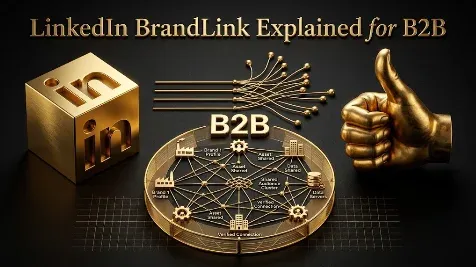
LinkedIn BrandLink: Brand Video Alongside Creators and Publishers
LinkedIn BrandLink lets B2B brands run video ads alongside premium creator and publisher content on LinkedIn, so your ad borrows the trust and attention of a show people chose to watch instead of interrupting the feed. It began as the Wire Program and expanded into BrandLink, and in 2026 LinkedIn added premium creator sponsorships under Top Voices 360, bundled it with live events, brought in global publishers, and started opening it as a self-serve option in Campaign Manager for select customers. It is a brand and recall play built on context, not a lead-generation format, so you measure it on completion, view rate, and lift, and let retargeting and your feed campaigns capture the demand it creates. This guide covers what BrandLink is, how it works, what changed in 2026, who the creators and publishers are, how to buy it, and how to measure it for B2B.
Key takeaways
- BrandLink runs your video ad alongside premium creator and publisher content on LinkedIn, so it is contextual brand advertising, not a lead engine.
- It launched as the Wire Program and expanded into BrandLink, and in 2026 added Top Voices 360 creator sponsorships, live-event bundles, and new global publishers.
- It is becoming partly self-serve: publisher campaigns are available in Campaign Manager for select customers, while premium creator shows remain a managed buy.
- LinkedIn reports higher completion and view rates and more downstream leads, and a LinkedIn-commissioned 2026 survey reports strong marketer and buyer support for creators and video, but both are directional.
- Treat it like a brand channel: measure context, completion, and downstream conversion, and pair it with retargeting to turn attention into pipeline.
What is LinkedIn BrandLink?
BrandLink is LinkedIn’s premium video program that places your brand’s video ads with content people actively watch: videos from business creators, original shows, and premium publishers. Instead of a standalone ad in the feed, your spot runs in-stream, before or around content a professional chose to open, which lends your brand the credibility of that context. LinkedIn first launched this as the Wire Program, focused on publisher content, and then expanded and rebranded it as BrandLink, bringing in named creators, content sponsorships, and curated shows. In 2026 it went further, adding premium creator sponsorships under a program called Top Voices 360, where a brand starts with an exclusive editorial show supported by BrandLink ads. If you have heard of the Wire Program, BrandLink is its larger successor, and the two names describe the same underlying idea: contextual brand video on LinkedIn.
How does LinkedIn BrandLink work?
Your video ad runs in-stream with premium content, and the content comes in a few forms. There are Shows by LinkedIn, themed collections of original and creator video on topics the professional audience cares about, such as the CEO playbook, AI and innovation, starting and scaling a business, female entrepreneurship, and small business stories. A single show can carry your ads across several creators’ and publishers’ videos, so you sponsor a theme rather than a single clip. Here is the shape of it at a glance.
| Element | What to know |
|---|---|
| Format | In-stream video ads before or around premium content |
| Content | Business creators, original Shows by LinkedIn, and publisher video |
| Creators | Named business creators, a select pool that LinkedIn keeps growing |
| Publishers | 40-plus global outlets, from ADWEEK and Fast Company to TIME, NYSE, and Reuters Japan |
| Objective | Brand awareness, recall, and consideration |
| Access | Managed premium buy, plus self-serve in Campaign Manager for select customers |
| Targeting | By location and language, on LinkedIn’s professional base |
Because it is contextual, the pitch is resonance over reach: the ad is seen next to content the viewer trusts, which LinkedIn argues makes it more memorable.
What is new in BrandLink for 2026?
In 2026 LinkedIn expanded BrandLink in several ways worth knowing if you are planning a brand buy.
- Top Voices 360: premium creator sponsorships built on Shows by LinkedIn, where you start with an exclusive editorial show supported by BrandLink ads and can extend into co-branded posts and event appearances.
- Live-event bundles: BrandLink and Event Ads packaged into a single sponsorship around publisher-hosted events such as the Forbes Under 30 Summit and the WSJ Future of Everything.
- New global publishers: outlets like Axel Springer in Germany, The CEO Magazine in Australia, NYSE and TIME in the US, Reuters Japan, and Times Network in India, joining more than 40 existing media partners.
- Self-serve access: BrandLink publisher campaigns became available as a self-serve option in Campaign Manager for select customers, rather than only a fully managed buy.
- Programmatic CTV: you can now buy LinkedIn CTV Ads directly in Campaign Manager or programmatically through The Trade Desk, so brand video extends to the living room too.
Together these move BrandLink from a single managed publisher buy toward a broader, partly self-serve brand-video offering spanning creators, publishers, live events, and connected TV.
Who are the creators and publishers?
BrandLink’s value is the names it puts your brand beside. On the creator side, the roster spans business figures such as Steven Bartlett, Gary Vaynerchuk, Guy Raz, Bernard Marr, Allie K. Miller, Rebecca Minkoff, Candace Nelson, and Shelley Zalis, and in 2026 LinkedIn added names like Ramit Sethi, Corporate Natalie, Meghana Dhar, and Aishwarya Srinivasan, with the pool still growing. On the publisher side, ads run alongside content from outlets including ADWEEK, Condé Nast, Fast Company, The Washington Post, USA TODAY, Morning Brew, Inc., and Entrepreneur, now joined by global partners such as TIME, NYSE, Reuters Japan, Axel Springer, The CEO Magazine, and Times Network, across more than 40 media outlets with multilingual and regional options. The point of the named partners is trust by association: a buyer who respects a creator or publisher brings some of that regard to the brand shown alongside them, which is exactly what a brand program is buying.
How do you buy and access BrandLink?
BrandLink is still largely a managed, premium placement, but access is opening up. As of 2026, BrandLink campaigns with publishers are available as a self-serve option in Campaign Manager for select customers, so some advertisers can plan and launch publisher placements themselves, while the premium creator shows and Top Voices 360 sponsorships remain a managed buy you arrange with LinkedIn. LinkedIn has not published open self-serve pricing or minimums, and availability depends on the show, the market, and whether your account is in the select group, so confirm current access and partners directly with LinkedIn. The practical implication is unchanged: BrandLink suits brands with a real brand budget and a reason to invest in premium context, rather than a small performance advertiser looking to switch it on for a week.
What is BrandLink for?
It is for brand building, not lead capture. The whole premise is that running alongside trusted creator and publisher content makes your brand more memorable to the professional audience, so the goal is awareness, recall, and consideration earlier in the buying journey, the same job as a brand campaign on television. That lines up with the reality of B2B, where most of your market is not in-market at any given moment, so the brands buyers remember when they do enter the market are the ones that stayed credible and visible. A LinkedIn-commissioned 2026 survey of B2B marketers and buyers, conducted by YouGov, put a number on why that matters: it reported that 56% of B2B buyers who follow creators rely on their input in the final buying stage to confirm a decision. Treat that as directional and commissioned rather than independent, but the direction fits what brand advertising has always done. BrandLink is not where you expect a form fill, and judging it on last-click leads will always make it look like a failure.
Does BrandLink work, and how do you measure it?
LinkedIn reports encouraging early numbers: video ads run with this premium content showed completion rates up to around 130% higher and view rates up to roughly 23% higher than standard video ads, and it says viewers exposed to BrandLink ads are up to 18% more likely to become a lead later. Its 2026 marketing survey adds supporting context, with 81% of B2B CMOs saying video accelerates their sales cycles and 79% saying it accelerates lead conversion. Treat all of these as platform-reported or commissioned and directional, not independently verified, but the direction is plausible, because contextual placement next to chosen content naturally earns more attention. The way to read BrandLink is a three-stage chain we call Context, Completion, Conversion: the trusted context lifts attention, which shows up as higher completion and view rates, which in turn makes the viewer more likely to convert later through your other campaigns. So measure the first two directly, completion and view rate and brand lift, and measure the third through the retargeting and pipeline that follow, not through a direct cost per lead on the BrandLink spend itself.
When does BrandLink make sense, and common mistakes?
BrandLink fits when brand matters to your deals and you have budget for a brand layer: large, considered purchases where trust affects who wins, account-based programs where you want target accounts to know you before sales reaches out, and brands investing in category presence rather than only this quarter’s leads. It does not fit a small budget, a pure performance mandate, or a need for measurable leads this month. The common mistakes follow from that mismatch: judging BrandLink on direct cost per lead and declaring it broken, running it with no retargeting or feed follow-up so the attention it builds goes nowhere, and treating it as a substitute for performance campaigns rather than a layer on top. Used as a brand play with a conversion path behind it, it does the job it is built for.
Borrow trust, build recall, convert later
Here is the thread. BrandLink puts your video next to creators and publishers your buyers already trust, so it borrows that trust to build recall, and recall is what makes you the brand a buyer remembers when they finally enter the market. Measure it as the brand channel it is, on context, completion, and lift, the same way you would read CTV or any video brand play, and then capture the demand it creates with retargeting and feed campaigns that convert the now-familiar audience. Borrow trust, build recall, convert later. If you want a LinkedIn brand and demand program that builds recall and converts it to pipeline, you can book a demo.
Frequently Asked Questions
Q1. What is LinkedIn BrandLink?
LinkedIn BrandLink is a premium video program that runs your brand’s video ads alongside content people watch on LinkedIn, including business creators, original Shows by LinkedIn, and premium publisher video. It is contextual brand advertising: your ad borrows the trust of chosen content rather than interrupting the feed. It began as the Wire Program and expanded into BrandLink, and in 2026 added premium creator sponsorships under Top Voices 360, live-event bundles, and new global publishers.
Q2. How does LinkedIn BrandLink work?
Your video ad runs in-stream, before or around premium creator and publisher content. You can sponsor themed Shows by LinkedIn, such as the CEO playbook or AI and innovation, and a single show can carry your ads across several creators’ and publishers’ videos. The placement is contextual, so the pitch is resonance over reach: being seen next to trusted content to be more memorable.
Q3. What is the difference between BrandLink and the Wire Program?
They are the same underlying program at different stages. LinkedIn launched contextual in-stream video as the Wire Program, focused on running ads alongside publisher content, then expanded and rebranded it as BrandLink, adding named business creators, content sponsorships, and themed Shows by LinkedIn. If you have heard of the Wire Program, BrandLink is its larger, creator-inclusive successor.
Q4. Which creators and publishers are in BrandLink?
The creator roster includes business figures such as Steven Bartlett, Gary Vaynerchuk, Guy Raz, Bernard Marr, Allie K. Miller, Rebecca Minkoff, Candace Nelson, and Shelley Zalis, with 2026 additions like Ramit Sethi, Corporate Natalie, and Meghana Dhar. On the publisher side, ads run alongside more than 40 outlets including ADWEEK, Condé Nast, Fast Company, The Washington Post, and USA TODAY, now joined by global partners such as TIME, NYSE, Reuters Japan, Axel Springer, and Times Network.
Q5. Is LinkedIn BrandLink self-serve, and how do you buy it?
Partly. As of 2026, BrandLink campaigns with publishers are available as a self-serve option in Campaign Manager for select customers, so some advertisers can plan and launch publisher placements themselves. The premium creator shows and Top Voices 360 sponsorships are still a managed buy you arrange with LinkedIn. LinkedIn has not published open self-serve pricing or minimums, and availability depends on the show, market, and account, so confirm current access directly with LinkedIn.
Q6. What is BrandLink used for?
Brand awareness, recall, and consideration, not direct lead capture. The premise is that appearing alongside trusted creator and publisher content makes your brand more memorable to professionals earlier in the buying journey. That matters because most B2B buyers are not in-market at any given time, so the goal is to be the credible brand they remember when they do enter the market and are confirming who to shortlist.
Q7. Does LinkedIn BrandLink actually perform?
LinkedIn reports video ads with this premium content saw completion rates up to about 130% higher and view rates up to roughly 23% higher than standard video ads, and that viewers are up to 18% more likely to become a lead. A LinkedIn-commissioned 2026 survey adds that 81% of B2B CMOs say video accelerates sales cycles. These are platform-reported or commissioned and directional, not independently verified, so measure it as a brand channel and confirm with your own lift and pipeline.
Q8. How do you measure LinkedIn BrandLink for B2B?
Measure it like a brand channel, in three stages: context, completion, and conversion. Track completion rate, view rate, and brand lift directly, since those reflect the attention the contextual placement earns. Then measure conversion downstream, through the retargeting and pipeline that follow, rather than expecting a direct cost per lead on the BrandLink spend. Judging it on last-click leads misreads what it does.
More Featured Blogs
View All Blogs
LinkedIn Ads and Salesforce: How to Connect Them and Why


LinkedIn Ads and HubSpot: How to Connect Them and Why
LinkedIn Company Engagement Report: Measure ABM by Account