Quick Summary
Summarize this article instantly with your preferred AI model.
How to Use LinkedIn Ads for a Product Launch
How to Use LinkedIn Ads for a Product Launch
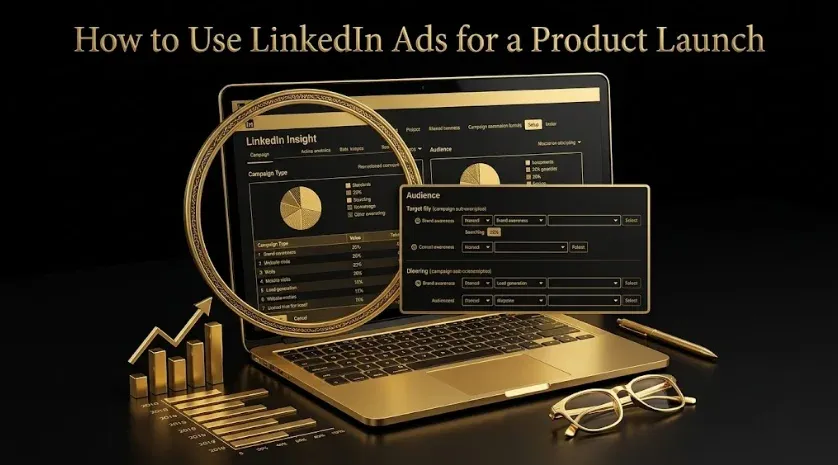
A product launch on LinkedIn works best as a three-phase campaign — build awareness before, drive action at launch, and sustain demand after — not as a single burst of announcement ads on launch day. The mistake that wastes launches is treating the launch as one moment: turning on ads the day you ship, to an audience that’s never heard of you, and turning them off a week later. The audience isn’t warmed, the launch-day spike fades, and the momentum is lost. A staged approach builds anticipation, converts it at launch, and keeps the demand alive afterward. This guide covers the before, during, and after of a LinkedIn launch and how to run each phase.
Key takeaways
- Run a launch as three phases — before, during, after — not a single launch-day burst.
- Before: build awareness and anticipation with your target audience so launch day lands warm.
- During: drive action — the announcement, demo, or sign-up — to warmed and broad audiences.
- After: sustain demand by retargeting engagers and keeping the message alive past the spike.
- Build retargeting audiences throughout, so each phase feeds the next.
Why stage a launch instead of a single burst?
Because a single launch-day burst wastes the moment. If you turn on ads only when you ship, you’re announcing to a cold audience that has no context for who you are or why the product matters — so the announcement lands flat. And if you turn the ads off shortly after, the launch-day attention spike fades with nothing to sustain it, and the demand you briefly created evaporates. A launch is not a moment; it’s an arc.
Staging it fixes both problems. Building awareness beforehand means launch day reaches an audience that’s already anticipating it, so the announcement converts rather than introduces. Sustaining afterward means the demand you created keeps producing pipeline past the initial spike. The launch-day announcement is the middle of the story, not the whole of it.
How do you build awareness before launch?
By creating anticipation with your target audience ahead of the ship date. Before launch, run awareness and teaser campaigns that frame the problem your product solves and build familiarity, so that when the launch comes, your audience already knows you and cares about the space. This phase is about warming — reaching your ICP with problem-framing content, teasers, or an invitation to register interest, and building the retargeting audiences you’ll convert at launch. The goal is that launch day arrives to an audience primed for it, not a cold one hearing about you for the first time.
How do you drive action at launch?
By shifting to conversion-focused campaigns aimed at the warmed audience and a broader reach. At launch, the message becomes the announcement and the ask — see the product, book a demo, sign up, learn more. Target the audience you warmed beforehand, who are primed to act, plus a broader ICP audience to maximize reach at the moment of highest relevance. This is where the anticipation you built converts: the warmed audience responds because they were expecting it, and the broader reach captures newly-relevant attention. Use formats that drive action for the conversion audience while maintaining awareness reach for the wider one.
| Phase | Objective | Audience | Focus |
|---|---|---|---|
| Before | Awareness, anticipation | ICP, teaser/interest | Warm the audience |
| During | Action, conversion | Warmed audience + broad ICP | Convert the anticipation |
| After | Sustain demand | Engagers, retargeting | Keep momentum past the spike |
How do you sustain demand after launch?
By keeping the campaign alive past launch day, retargeting the people who engaged. After the launch spike, retarget everyone who engaged with your launch campaigns — visited the page, watched the video, showed interest — with follow-up content, proof, and conversion offers. Add case studies and results as they come in, and maintain awareness so the product keeps building recognition rather than disappearing once the announcement is old. This phase turns the launch from a one-time spike into sustained demand, converting the audience the launch created and keeping momentum going. The retargeting audiences you built through the before and during phases are what make this phase work.
The launch framework
Run a LinkedIn launch as a deliberate arc:
- Before — build anticipation. Run awareness and teaser campaigns to your ICP, framing the problem and warming the audience while building retargeting pools.
- During — drive action. Shift to conversion campaigns targeting the warmed audience plus a broad ICP, with the announcement and a clear ask.
- After — sustain demand. Retarget engagers with proof and offers, add case studies, and keep awareness running past the spike.
- Build retargeting throughout so each phase feeds the next.
- Measure by phase — awareness on reach and recall before, action at launch, pipeline after.
How do you measure a product launch on LinkedIn?
By phase, since each has a different job. The before phase is measured on reach and awareness — did you warm enough of your target audience. The launch phase is measured on action — sign-ups, demos, or whatever the conversion goal is. The after phase is measured on sustained pipeline — did the demand keep producing past the spike. Judging the whole launch on launch-day conversions alone misses most of the picture, because the awareness you built beforehand and the demand you sustained afterward are where much of the value sits. A launch that spikes on day one and produces nothing after wasn’t a success; one that builds anticipation, converts it, and keeps generating pipeline was — and only phase-appropriate measurement shows the difference.
Frequently Asked Questions
Q1. How do you use LinkedIn Ads for a product launch?
Run the launch as three phases: build awareness and anticipation before launch so your audience is warmed, drive action at launch with the announcement and a clear ask to warmed and broad audiences, and sustain demand after by retargeting engagers past the spike. Build retargeting audiences throughout so each phase feeds the next.
Q2. Why shouldn’t you run a launch as a single burst?
Because a launch-day-only burst announces to a cold audience with no context, so it lands flat, and turning ads off shortly after lets the attention spike fade with nothing to sustain it. A launch is an arc, not a moment — building awareness beforehand makes launch day convert, and sustaining afterward keeps the demand producing past the initial spike.
Q3. How do you build pre-launch awareness on LinkedIn?
Run awareness and teaser campaigns to your ICP ahead of the ship date, framing the problem your product solves and building familiarity, so launch day reaches an audience already anticipating it. Use problem-framing content, teasers, or an interest-registration offer, and build the retargeting audiences you’ll convert at launch. The goal is a primed audience, not a cold one.
Q4. What should launch-day LinkedIn campaigns focus on?
Driving action. Shift to conversion-focused campaigns with the announcement and a clear ask — see the product, book a demo, sign up — targeting the audience you warmed beforehand plus a broader ICP for maximum reach. The warmed audience converts because they were expecting it, while the broader reach captures newly-relevant attention at the moment of highest interest.
Q5. How do you sustain demand after a product launch?
Keep the campaign running past launch day and retarget everyone who engaged — page visitors, video watchers, interested accounts — with follow-up content, proof, and conversion offers. Add case studies as they come in and maintain awareness so the product keeps building recognition. This converts the audience the launch created and turns a one-time spike into sustained demand.
Q6. What LinkedIn ad formats work for a product launch?
Awareness and video formats work for the pre-launch and awareness phases where the goal is anticipation and reach, while conversion-focused formats like single image and Lead Gen Forms drive action at launch. Retargeting formats sustain demand afterward. Match the format to each phase’s objective — reach formats before, action formats at launch, retargeting after.
Q7. How long before a launch should you start advertising?
Early enough to genuinely warm your audience — enough time before the ship date for awareness and anticipation to build, so launch day reaches primed rather than cold people. The exact lead time depends on your audience and sales cycle, but the principle is that pre-launch awareness needs real runway to work, not a few days before you ship.
Q8. How do you measure a LinkedIn product launch?
Measure by phase: reach and awareness before launch, action like sign-ups and demos at launch, and sustained pipeline after. Judging the whole launch on launch-day conversions alone misses the awareness you built beforehand and the demand you sustained afterward, where much of the value sits. Phase-appropriate measurement shows whether the launch built lasting demand.
More Featured Blogs
View All Blogs
How to Use a Guarantee or Risk Reversal in Your Ads


How to Use Emotion in B2B Ads
How to Use Storytelling in Your LinkedIn Ads