Quick Summary
Summarize this article instantly with your preferred AI model.
How to Use LinkedIn Ads for an AI Product
How to Use LinkedIn Ads for an AI Product
Marketing an AI product on LinkedIn runs into a specific set of challenges: the market is crowded and hype-heavy (everyone claims to be “AI-powered”), buyers are skeptical of inflated AI claims, and the decision often involves both technical and business evaluators. Standing out means differentiating with specifics and proof rather than adding another “AI-powered” buzzword to the noise, addressing the skepticism that hype has created, and reaching two different buyer types with the messages each responds to. This guide covers how to advertise an AI product effectively — cutting through the crowded market, earning trust with proof, and reaching both the technical and business buyers who evaluate it.
Key takeaways
- The AI market is crowded and hype-heavy — “AI-powered” claims are everywhere and mean little.
- Buyers are skeptical of inflated AI claims — many have seen hype that didn’t deliver.
- Differentiate with specifics and proof, not another buzzword added to the noise.
- AI decisions often involve both technical and business buyers — each needs a different message.
- Avoid adding to the hype — be the credible, proven option in a market full of claims.
Why is marketing an AI product hard?
Because the market is saturated with AI claims and buyers have grown skeptical of them. Nearly every product now claims to be “AI-powered,” so the term has lost its meaning as a differentiator — saying you use AI puts you in a crowd of everyone saying the same thing, with nothing to distinguish you. At the same time, the flood of AI hype has made buyers skeptical: they’ve heard inflated claims about AI capabilities that didn’t deliver, so they approach AI marketing warily, discounting bold claims and wanting to see whether the product actually works.
This creates a double challenge. You have to stand out in a market where everyone is making the same AI claims, and you have to overcome the skepticism that all that hype has generated. Leaning into the hype — more AI buzzwords, bigger claims — makes both problems worse, because it adds to the noise you’re trying to stand out from and confirms the skepticism buyers already have. Marketing an AI product well requires the opposite of hype: specificity, proof, and credibility that differentiate you from the buzzword crowd and earn trust from skeptical buyers.
How do you stand out in a crowded AI market?
By being specific and proving what your product actually does, rather than claiming to be “AI-powered” like everyone else. When every competitor is making the same generic AI claim, specificity is what distinguishes you: showing exactly what your product does, how it works, and what results it delivers, rather than a vague “we use AI.” Specific, concrete claims stand out against generic buzzwords because they’re yours alone and they demonstrate real capability, while “AI-powered” is interchangeable and demonstrates nothing.
| Approach | Result |
|---|---|
| ”AI-powered” buzzwords | Blends into the crowd, means nothing |
| Specific capability claims | Differentiates, shows what you actually do |
| Vague AI promises | Deepens buyer skepticism |
| Concrete proof and results | Earns trust, stands out |
The discipline is resisting the pull to market your product as generically AI as everyone else, and instead leading with what specifically makes it valuable — the concrete capability, the real results, the specific problem it solves. This differentiates you in the crowded market and, because it’s specific and provable rather than hyped, it also addresses the skepticism buzzwords create.
How do you overcome AI skepticism?
By leading with proof rather than claims, since skeptical buyers won’t take AI promises on faith. The flood of AI hype has made buyers distrust bold claims, so an AI product that markets with more bold claims deepens the distrust — while one that leads with concrete proof of what it actually does earns credibility. Show real results, demonstrate the actual capability, and be specific about what the product does and doesn’t do, rather than making the inflated promises that created the skepticism. This is the same principle as reaching any skeptical audience: proof over promises, honesty over hype, credibility over selling — applied to the specific skepticism that AI hype has generated. The AI product that stands out to skeptical buyers is the one that under-claims and over-proves, differentiating itself as the credible, proven option in a market full of vendors making claims they can’t back. Acknowledging the hype and positioning yourself against it — as the AI product that actually delivers rather than another one making promises — turns the market’s skepticism into an opportunity, since buyers looking for a credible option amid the hype are exactly who your proof-led approach reaches.
The AI-product framework
Market an AI product deliberately:
- Avoid the buzzword crowd — don’t lead with generic “AI-powered” claims that mean nothing.
- Differentiate with specifics — show exactly what your product does and the results it delivers.
- Lead with proof — concrete evidence that earns trust from AI-skeptical buyers.
- Reach both buyer types — technical evaluators with substance, business buyers with the business case.
- Position against the hype — be the credible, proven option in a market full of claims.
How do you reach both technical and business buyers?
By giving each the message their role responds to, since AI product decisions often involve both. AI products are frequently evaluated by both technical buyers — who assess whether the AI actually works, how it’s built, and whether it holds up technically — and business buyers, who assess the business case, ROI, and outcomes. These two evaluate differently and respond to different messages: the technical buyer wants substance and proof of how the AI works, distrusting marketing hype, while the business buyer wants the business impact and value. Reaching both means running messaging suited to each — technical substance and proof for the technical evaluator, the business case and outcomes for the business buyer — rather than one message that serves neither well. This matters especially for AI products because the technical buyer’s scrutiny is often intense (AI claims invite technical skepticism), so the substance-and-proof message for them has to genuinely demonstrate capability, while the business buyer needs to understand what that capability means for their business. Using LinkedIn’s targeting to reach each buyer type with the appropriate message ensures the technical evaluator gets the substance they demand and the business buyer gets the case they need, addressing the reality that an AI purchase often requires convincing both a skeptical technical evaluator and a value-focused business buyer, each on their own terms.
Frequently Asked Questions
Q1. How do you market an AI product on LinkedIn?
Differentiate with specifics and proof rather than generic “AI-powered” buzzwords, lead with concrete evidence to overcome buyer skepticism about AI hype, and reach both technical and business buyers with the messages each responds to. Position yourself as the credible, proven option in a crowded, hype-heavy market, rather than adding another inflated AI claim to the noise.
Q2. Why is marketing an AI product difficult?
Because the market is saturated with AI claims — nearly every product claims to be “AI-powered,” so the term no longer differentiates — and buyers have grown skeptical of inflated AI claims that didn’t deliver. You have to stand out in a crowd making identical claims while overcoming the skepticism all that hype created, and leaning into more hype makes both problems worse.
Q3. How do you stand out in a crowded AI market?
By being specific and proving what your product actually does, rather than claiming to be “AI-powered” like everyone else. When competitors all make the same generic AI claim, specificity distinguishes you — showing exactly what your product does, how it works, and what results it delivers. Concrete claims stand out against interchangeable buzzwords because they’re yours alone and demonstrate real capability.
Q4. How do you overcome skepticism about AI claims?
Lead with proof rather than claims, since skeptical buyers won’t take AI promises on faith. The flood of hype has made buyers distrust bold claims, so more claims deepen distrust while concrete proof earns credibility. Show real results, demonstrate actual capability, and be specific about what the product does and doesn’t do, positioning as the AI product that actually delivers.
Q5. Should you call your product “AI-powered” in ads?
Generally not as your lead — “AI-powered” is what everyone claims, so it blends you into the crowd and means nothing as a differentiator, while also feeding buyer skepticism. Instead, lead with what specifically makes your product valuable — the concrete capability and results — which differentiates you and, being specific and provable, addresses the skepticism generic AI claims create.
Q6. How do you reach technical buyers for an AI product?
With substance and proof of how the AI actually works, since technical buyers assess whether it holds up technically and distrust marketing hype. The message has to genuinely demonstrate capability — how it’s built, what it does, evidence it works — because AI claims invite intense technical scrutiny. Give the technical evaluator the substance they demand rather than buzzwords they’ll dismiss.
Q7. Do AI products need to reach both technical and business buyers?
Often yes — AI purchases frequently involve both a technical evaluator, who assesses whether the AI works, and a business buyer, who assesses the business case and ROI. They evaluate differently and need different messages: technical substance and proof for one, business impact for the other. Reaching both with appropriate messaging addresses the reality that the decision requires convincing each on their own terms.
Q8. How is marketing an AI product like reaching a skeptical audience?
It’s a specific case of it — AI hype has made buyers skeptical of AI claims, so the proof-over-promises, honesty-over-hype, credibility-over-selling approach for any skeptical audience applies directly. The AI product that stands out under-claims and over-proves, positioning as the credible, proven option amid the hype. The market’s skepticism becomes an opportunity for the vendor who leads with proof rather than claims.
More Featured Blogs
View All Blogs
How to Use the LinkedIn Ad Library for Competitor Research


LinkedIn Carousel Ads: What the Specs and Data Say
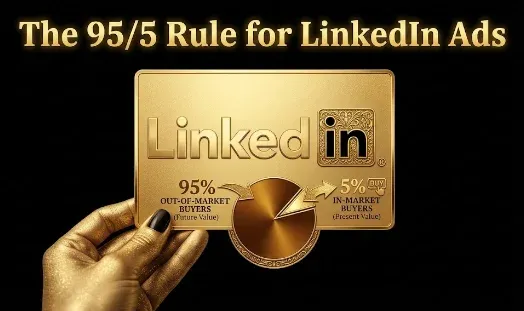
The 95/5 Rule for LinkedIn Ads