Quick Summary
Summarize this article instantly with your preferred AI model.
LinkedIn Ads and the B2B Dark Funnel
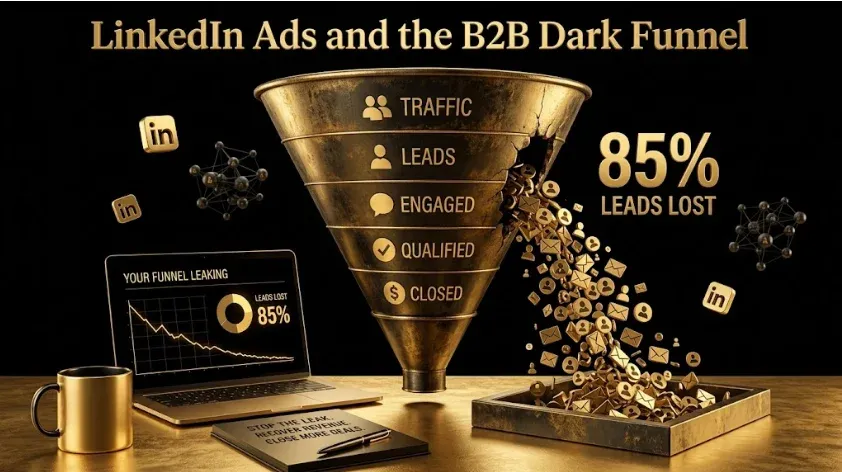
LinkedIn Ads and the B2B Dark Funnel
The dark funnel is where much of B2B buying actually happens — in peer conversations, communities, content consumption, and word of mouth that you can’t see or track — and it’s the reason last-click attribution systematically undervalues channels like LinkedIn. Buyers form opinions and preferences in the dark funnel long before they ever fill out a form or click a trackable link, so by the time you see them, the influence has already happened invisibly. LinkedIn Ads shape that invisible research by building the awareness and preference that plays out where you can’t track it — but that means you can’t attribute their impact through clicks. This guide covers what the dark funnel is, why last-click misses it, and how to measure influence you can’t directly track.
Key takeaways
- The dark funnel is where buyers research invisibly — peer conversations, communities, word of mouth.
- Buyers form opinions before they’re trackable, so influence happens before you ever see them.
- Last-click misses the dark funnel entirely — it only captures the trackable final action.
- LinkedIn Ads shape the dark funnel by building awareness and preference that plays out invisibly.
- Measure holistically — accept that some influence is untrackable, and don’t judge LinkedIn on clicks alone.
What is the B2B dark funnel?
The dark funnel is the part of the buying journey that happens invisibly, outside anything you can track. B2B buyers do much of their research and opinion-forming in places you can’t see — talking to peers, participating in communities and private channels, consuming content without identifying themselves, hearing about products through word of mouth — and none of that shows up in your analytics. By the time a buyer takes a trackable action, like filling out a form, they’ve often already formed strong opinions through this invisible research.
This matters because it means a large part of what influences B2B buyers is untrackable. The forms, clicks, and conversions you can measure are the visible tip of a buying journey whose most important influence often happened in the dark funnel, before the buyer ever became visible to you. Understanding that buyers form preferences invisibly, before they’re trackable, reframes how you think about measurement — because what you can see is only a fraction of what actually influenced the decision.
Why does last-click attribution miss the dark funnel?
Because last-click only credits the final trackable action, ignoring all the invisible influence that preceded it. Last-click attribution assigns credit to the last click before conversion — but the dark funnel, by definition, isn’t clicks; it’s the invisible research and opinion-forming that shaped the buyer before that final trackable moment. So last-click captures the visible end of the journey and misses everything that happened in the dark, which is often where the decisive influence occurred.
This is why last-click systematically undervalues channels that work in the dark funnel, like LinkedIn. When LinkedIn ads build awareness and preference that a buyer then acts on through a later search or direct visit, last-click credits that final action and erases LinkedIn’s role in shaping the buyer invisibly beforehand. The channel did influential work in the dark funnel, but last-click can’t see it, so it assigns the credit elsewhere. A measurement approach that only counts trackable last actions will always understate the channels whose influence happens where it can’t be tracked.
How do LinkedIn Ads work in the dark funnel?
By building the awareness and preference that plays out invisibly, influencing buyers before they’re trackable:
| Trackable funnel | Dark funnel | |
|---|---|---|
| Where it happens | Forms, clicks, visible actions | Peer talk, communities, word of mouth |
| Visibility | Measurable | Invisible |
| Last-click | Captures it | Misses it entirely |
| LinkedIn’s role | Direct-response conversions | Building awareness and preference invisibly |
LinkedIn Ads reach buyers and build familiarity, credibility, and preference — and much of that influence plays out in the dark funnel, as buyers who saw your ads carry that awareness into their invisible research, mention you in peer conversations, or think of you when a need arises, without any trackable link back to the ads. So LinkedIn’s impact isn’t only the trackable conversions it drives; it’s also the invisible influence it seeds in the dark funnel, which shapes decisions in ways clicks can’t capture. This is real, valuable influence — it’s just untrackable, which is a measurement limitation, not an absence of impact.
The dark-funnel framework
Handle the dark funnel deliberately:
- Recognize the dark funnel exists — much B2B research and opinion-forming happens invisibly.
- Understand last-click misses it — it captures only the trackable final action, not the invisible influence.
- Accept LinkedIn’s dark-funnel role — it builds awareness and preference that plays out untracked.
- Measure holistically — use self-reported attribution and pipeline correlation, not just clicks.
- Don’t judge LinkedIn on clicks alone — that undervalues the untrackable influence it creates.
How do you measure influence you can’t track?
By using measurement approaches that capture influence clicks miss, and accepting that some impact is genuinely untrackable. Since the dark funnel is invisible to click-based attribution, you measure it indirectly: self-reported attribution (asking buyers how they heard of you, which surfaces influence that tracking misses), and correlation between your LinkedIn investment and overall pipeline and demand (seeing whether spend moves the outcomes even when you can’t trace individual paths). These approaches capture the reality that click-tracking can’t — that a channel building preference in the dark funnel shows up in what buyers say and in aggregate demand, even without a trackable link. The essential mindset shift is accepting that some influence is untrackable and that this doesn’t mean it’s absent — the dark funnel is real and influential precisely because it’s where much B2B buying happens, so judging a channel only on the trackable fraction of its impact systematically undervalues it. The right approach is to measure holistically, using self-reported and correlation-based signals alongside trackable conversions, and to resist the temptation to conclude that untrackable influence didn’t happen. LinkedIn’s work in the dark funnel is exactly the kind of impact that a purely click-based view erases, which is why measuring it requires looking beyond clicks to the fuller picture of how buyers actually form their decisions.
Frequently Asked Questions
Q1. What is the B2B dark funnel?
The dark funnel is the part of the buying journey that happens invisibly, outside anything you can track — peer conversations, communities, content consumption, and word of mouth. B2B buyers form opinions and preferences there before they take any trackable action, so much of what influences a decision happens before the buyer becomes visible to you. It’s the invisible majority of the buying journey.
Q2. Why does last-click attribution miss the dark funnel?
Because last-click only credits the final trackable action, while the dark funnel is the invisible research and opinion-forming that precedes it. Last-click captures the visible end of the journey and misses everything that happened in the dark, which is often where the decisive influence occurred. So it systematically undervalues channels whose impact happens where it can’t be tracked.
Q3. How do LinkedIn Ads influence the dark funnel?
By building awareness, familiarity, and preference that plays out invisibly — buyers who saw your ads carry that into their untracked research, mention you in peer conversations, or think of you when a need arises, with no trackable link back. LinkedIn’s impact includes this invisible influence in the dark funnel, not just the trackable conversions it drives, which shapes decisions clicks can’t capture.
Q4. Why does last-click undervalue LinkedIn?
Because LinkedIn often builds awareness and preference in the dark funnel that a buyer acts on later through a search or direct visit — and last-click credits that final action while erasing LinkedIn’s earlier invisible influence. The channel did influential work shaping the buyer beforehand, but last-click can’t see it and assigns the credit elsewhere, understating LinkedIn’s true contribution.
Q5. How do you measure the dark funnel?
Indirectly, since it’s invisible to click tracking: self-reported attribution (asking buyers how they heard of you, surfacing influence tracking misses) and correlation between LinkedIn investment and overall pipeline and demand. These capture influence that click-based attribution can’t, showing that a channel building preference in the dark funnel appears in what buyers say and in aggregate demand, even without traceable individual paths.
Q6. Is dark funnel influence real if you can’t track it?
Yes — untrackable doesn’t mean absent. The dark funnel is real and influential precisely because it’s where much B2B buying research happens. Judging a channel only on the trackable fraction of its impact systematically undervalues it. The influence LinkedIn builds in the dark funnel genuinely shapes decisions; it’s a measurement limitation that you can’t track it, not evidence it didn’t occur.
Q7. Should you judge LinkedIn Ads on trackable conversions alone?
No — that undervalues the untrackable influence LinkedIn creates in the dark funnel. Trackable conversions are the visible tip of LinkedIn’s impact, missing the awareness and preference it builds invisibly. Measure holistically, using self-reported attribution and pipeline correlation alongside trackable conversions, and resist concluding that untrackable influence didn’t happen, since much of LinkedIn’s value happens where clicks can’t see.
Q8. How does the dark funnel change B2B measurement?
It means what you can track is only a fraction of what influenced the decision, so measurement must look beyond clicks. Since buyers form preferences invisibly before becoming trackable, click-based attribution captures the visible end and misses the influential middle. Effective measurement combines trackable conversions with self-reported and correlation-based signals to approximate the fuller picture of how buyers actually decide.
More Featured Blogs
View All Blogs
The 95/5 Rule for LinkedIn Ads


LinkedIn Thought Leader Ads for B2B SaaS
LinkedIn Ads for ABM: The B2B SaaS Playbook