Quick Summary
Summarize this article instantly with your preferred AI model.
How to Build a Target Account List for ABM on LinkedIn
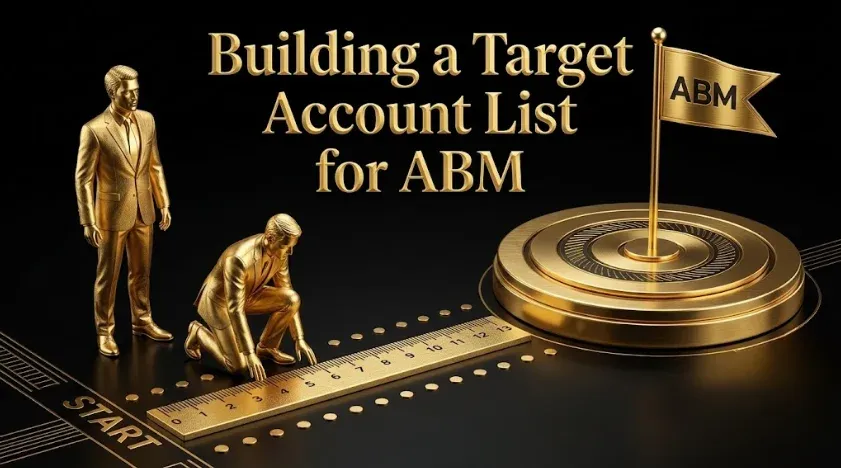
How to Build a Target Account List for ABM on LinkedIn
Before you run account-based advertising, you need a target account list — the specific accounts you’ll target — and building it well is what determines whether your ABM succeeds, because a bad list wastes ABM spend no matter how good the campaigns are. The list-building has three steps: define your ideal customer profile (what makes an account a good fit), source accounts that match it, and prioritize them, since not all accounts are equally valuable. Skipping this and targeting a vague or poorly-chosen set of accounts undermines the whole ABM effort, because you’re concentrating spend on the wrong companies. This guide covers how to build a target account list for ABM.
Key takeaways
- ABM requires a target account list — the specific accounts you’ll target — built before advertising.
- The quality of the list determines ABM success — a bad list wastes ABM spend.
- Building it has three steps: define your ICP, source matching accounts, and prioritize them.
- Define your ICP — what makes an account a good fit (industry, size, signals).
- Prioritize — not all accounts are equal, so tier them by value and fit.
Why does the account list determine ABM success?
Because ABM concentrates spend on specific accounts, so if those accounts are wrong, the spend is wasted regardless of execution. Account-based marketing works by focusing your effort and budget on a defined set of target accounts rather than a broad audience — which means the accounts you choose to target are the foundation of the whole approach. If the list is full of poor-fit accounts, you’re concentrating your ABM spend on companies that were never going to be good customers, and even excellent campaigns can’t fix a fundamentally wrong target list.
This makes list-building the highest-leverage part of ABM, not a preliminary step to rush through. The care you put into defining, sourcing, and prioritizing your target accounts determines whether your concentrated ABM spend goes toward the right companies or the wrong ones. A great account list focuses your effort where it can win; a poor one wastes it. So building the list well is essential, because everything downstream in ABM depends on targeting the right accounts, and no amount of campaign optimization compensates for a bad list.
How do you define your ICP?
By identifying what makes an account a good fit for your product. Your ideal customer profile is the definition of the accounts you should target — the characteristics of companies that are a strong fit and likely to become good customers. This typically includes attributes like industry, company size, and other firmographic characteristics, plus signals that indicate fit or intent — the traits that distinguish a good-fit account from a poor one.
Defining the ICP well is the foundation of the list, because it’s the criteria you’ll use to source and evaluate accounts. A clear, accurate ICP — based on what actually characterizes your best customers and best-fit prospects — gives you a precise definition to build the list against, while a vague or wrong ICP leads to a list of the wrong accounts. So invest in defining what genuinely makes an account a good fit, drawing on your understanding of your best customers, so the ICP accurately captures the accounts worth targeting. The ICP is the standard the whole list is built to, so getting it right is where list-building starts.
How do you source and prioritize accounts?
By finding accounts that match your ICP and then tiering them by value and fit:
| Step | What you do |
|---|---|
| Define ICP | Establish what makes an account a good fit |
| Source accounts | Find companies matching the ICP, from data, research, CRM |
| Prioritize | Tier accounts by value and fit — not all are equal |
Sourcing means finding the accounts that match your ICP — identifying real companies that fit your criteria, drawing on account data, research, your CRM, and other sources to build the set of accounts worth targeting. Prioritizing means recognizing that even among good-fit accounts, not all are equal — some are more valuable or better-fit than others — so you tier them, concentrating more effort on the highest-value, best-fit accounts. This prioritization connects to account tiering: you’re not treating all accounts on the list identically, but ranking them so your ABM effort weights toward the accounts that matter most. Sourcing gives you the accounts; prioritizing tells you where to focus, and together they turn your ICP definition into a ranked, actionable target list.
The account-list framework
Build a target account list deliberately:
- Recognize the list is the foundation — ABM concentrates spend, so the accounts you choose determine success.
- Define your ICP — what makes an account a good fit, based on your best customers.
- Source matching accounts — find real companies fitting the ICP, from data, research, and your CRM.
- Prioritize by value and fit — tier accounts, since not all are equal, to focus effort where it matters most.
- Refine over time — improve the list as you learn which accounts respond and convert.
Why prioritize accounts rather than treat them equally?
Because even among good-fit accounts, some are more valuable or winnable than others, so treating them equally spreads effort inefficiently. A target account list, even one built to a good ICP, contains accounts of varying value and fit — larger opportunities and smaller ones, better fits and marginal ones — so applying the same effort to every account means over-investing in less valuable accounts and under-investing in the most valuable. Prioritizing by tiering the accounts lets you concentrate more of your ABM effort and budget on the highest-value, best-fit accounts, where the return justifies deeper investment, while treating lower-priority accounts more efficiently. This is the account-tiering principle applied to the target list: the list defines who’s in your ABM, and prioritization defines how much to invest in each, so your concentrated ABM spend weights toward the accounts that matter most rather than being spread evenly regardless of value. Refining the list and its prioritization over time strengthens it further, as you learn which accounts respond and convert, updating both the ICP and the tiering based on real results. Building the list well, and prioritizing within it, is what makes ABM’s concentrated approach pay off, because it ensures the focus goes to the right accounts and the deepest investment goes to the most valuable ones, rather than concentrating spend on a poorly-chosen or undifferentiated set of companies.
Frequently Asked Questions
Q1. How do you build a target account list for ABM?
Define your ideal customer profile (what makes an account a good fit — industry, size, signals), source accounts that match it from data, research, and your CRM, and prioritize them by value and fit, since not all accounts are equal. The quality of the list determines ABM success, so build it carefully before advertising, and refine it over time as you learn which accounts respond.
Q2. Why does the account list matter so much for ABM?
Because ABM concentrates spend on specific accounts, so if those accounts are wrong, the spend is wasted regardless of execution. The accounts you choose are the foundation, and even excellent campaigns can’t fix a fundamentally wrong target list. List-building is the highest-leverage part of ABM, since everything downstream depends on targeting the right accounts.
Q3. How do you define your ICP for an account list?
Identify what makes an account a good fit for your product — the characteristics of companies likely to become good customers, typically including industry, company size, and other firmographics, plus signals of fit or intent. Base it on what actually characterizes your best customers, so the ICP accurately captures the accounts worth targeting. A clear, accurate ICP is the standard the whole list is built to.
Q4. How do you source accounts for ABM?
Find real companies that match your ICP, drawing on account data, research, your CRM, and other sources to build the set of accounts worth targeting. Sourcing turns your ICP criteria into an actual list of companies that fit them. The goal is identifying the real accounts that match your definition of a good-fit account, which become the candidates for your target list.
Q5. Why prioritize accounts instead of treating them equally?
Because even among good-fit accounts, some are more valuable or winnable than others, so treating them equally over-invests in less valuable accounts and under-invests in the most valuable. Prioritizing by tiering lets you concentrate more effort and budget on the highest-value, best-fit accounts, where the return justifies deeper investment, while treating lower-priority accounts more efficiently.
Q6. How do you prioritize target accounts?
Tier them by value and fit — ranking accounts so your effort weights toward the highest-value, best-fit ones. Among good-fit accounts, distinguish larger opportunities from smaller, better fits from marginal, and concentrate more investment on the top tier. This applies the account-tiering principle to your list, so your concentrated ABM spend goes deepest on the accounts that matter most rather than being spread evenly.
Q7. What happens if your account list is bad?
Your ABM spend is wasted, since you’re concentrating budget on accounts that were never going to be good customers. Because ABM focuses effort on a defined set of accounts, a poor list — full of bad-fit companies — directs that focus at the wrong targets, and even great campaigns can’t fix it. A bad list undermines the whole ABM effort, which is why list-building matters so much.
Q8. Should you refine your target account list over time?
Yes — improve the list as you learn which accounts respond and convert, updating both the ICP and the prioritization based on real results. Your initial list is built on your best understanding of fit, but actual campaign results reveal which accounts genuinely engage and convert, so refining the ICP and re-tiering accounts over time strengthens the list and makes your ABM increasingly focused on the right accounts.
More Featured Blogs
View All Blogs
LinkedIn Ads Landing Pages That Convert Cold, Expensive Clicks


LinkedIn Campaign Objectives: Which One to Choose for B2B